
Aluminum Heatsink
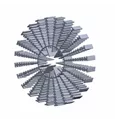
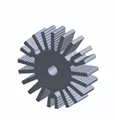
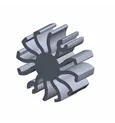
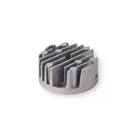
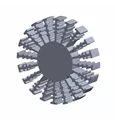
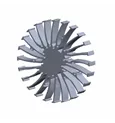
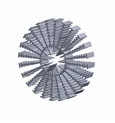
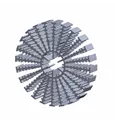
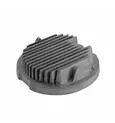
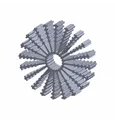
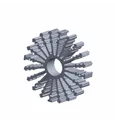
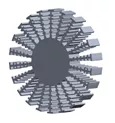
Aluminum heat sinks, used in a wide range of applications from electronics to automotive, are passive cooling elements that ensure effective dissipation of heat. Their main function is to be placed around components that generate high levels of heat and transfer this heat to the external environment. Aluminum is an ideal material for this task thanks to both its light weight and high thermal conductivity.
Aluminum heat sink systems can operate with natural airflow or fan assistance. However, what matters here is choosing the right aluminum passive heat sink model suitable for the specific application area. Thanks to these structures, which we frequently encounter in many electronic components such as processors, power transistors, and LED systems, the lifespan of devices is extended and their performance is improved.
The aluminum cooling solutions in which Sarnikon specializes stand out with their compliance with international quality standards and their customizable structure. The company, which can manufacture profiles and dimensions suitable for every industry, makes a notable difference especially in terms of efficiency and sustainability.
Selecting the right aluminum heatsink is critically important not only for the device’s performance but also for its longevity. First, the thermal power of the component to be cooled, in other words how much heat it generates, must be determined. This is because there is a significant cooling difference between a 10W LED driver and a 200W inverter.
Second, the mounting method of the heatsink must be decided: will it be glued or screwed? It should also be determined whether the system will operate with a fan or completely passively. Aluminum cooling systems are generally passive and do not require a fan, which both reduces energy consumption and guarantees quiet operation.
Sarnikon offers customized solutions to its customers in aluminum passive heatsink manufacturing, developing designs optimized according to the needs of the device. This both allows more compact systems to be built and improves cooling performance.
In addition, details such as the product’s size, surface area, and fin structure should also be taken into consideration when making a choice. A larger surface area provides more effective heat dissipation, but it must also be compatible with the overall design of the device. At this point, getting engineering support is highly beneficial.
Aluminum heat sinks are not specific to just one or two sectors; on the contrary, they are among the indispensable components of many industries. They are widely used especially in fields such as electronics, automotive, telecommunications, LED lighting, and renewable energy.
In LED lighting systems, aluminum cooling applications both extend product lifespan and increase light efficiency. In systems with intensive energy conversion, such as solar energy inverters, the use of aluminum passive heat sinks is quite common.
Sarnikon acts as a solution partner in both mass production projects and in sectors that require custom designs. With its aluminum heat sink varieties used especially in industrial control panels, power electronics modules, and RF applications, it is a preferred brand in Türkiye and around the world.
Along with the growth in the renewable energy sector, the need for highly efficient and environmentally friendly cooling systems is also increasing. The systems developed by Sarnikon provide solutions not only for energy efficiency, but also for projects with a low carbon footprint.
There are many different types of aluminum heat sinks on the market. The most commonly used include profile-type heat sinks, finned surface blocks, and special CNC-machined models. These models can be customized in both size and shape according to the needs of the system.
Profile-type aluminum heat sinks are generally designed longitudinally and stand out with structures that provide a large surface area. Since these structures provide high heat dissipation, they are especially preferred in LED drivers.
Block-type heat sinks, on the other hand, are suitable for more compact systems. In addition to these two main models, Sarnikon also offers custom solutions according to its customers’ needs. For example, production can be carried out with double-sided mounting plates or fin structures designed in different geometries.
In addition, surface treatments may vary depending on the area of use. Eloxal coating, painting, or special heat-reflective surfaces may be preferred. Each offers tailored solutions for different sectors and application types.
The pricing of aluminum heatsinks depends on several key factors:
– The amount of aluminum used
– The design and size of the profile
– The complexity of the production process
– Surface treatment and mounting type
– Production volume per unit
Especially in projects requiring custom design, the technical drawing and engineering phase can also be decisive in pricing. When production is carried out using existing molds, prices are more favorable, while for models that need to be manufactured from scratch, the cost increases somewhat.
Sarnikon offers its customers an open and transparent process regarding aluminum heatsink price. During the quotation stage, all details are communicated, and the most cost-effective solution is planned together in line with the technical data.
In the long run, choosing a high-quality and properly sized aluminum passive heatsink ensures that devices experience fewer malfunctions and reduces maintenance costs. This means that the initial investment cost more than pays for itself over time.
Aluminum heatsinks, used in many sectors from electronics to automotive and from lighting to power electronics, stand out with their ability to dissipate heat efficiently. As Sarnikon, we manufacture different types of aluminum heatsinks that cater to various needs. So, what are these types?
One of the most commonly used models is profile-type aluminum heatsinks. They are generally preferred in LED systems and power supplies. These heatsinks offer ideal solutions in areas where high heat dissipation is required. Another type is finned aluminum passive heatsink models. In these models, more efficient heat distribution is achieved thanks to the large surface area.
Block aluminum heatsinks, which can be specially cut according to cooling requirements, are highly suitable for industrial machines. In addition, aluminum heatsinks that can be produced in different geometries such as round, star, and rectangular can be directly integrated into device designs. In this way, a solution that is both aesthetic and functional is provided.
As much as the type of heatsink is important, how it is used is just as crucial. If you want to get maximum efficiency from an aluminum heatsink, you need to pay attention to certain points during installation.
First, there should be no gap between the heatsink and the heat source, because these gaps prevent direct heat transfer. For this reason, it is beneficial to use thermal paste or a heat-conductive tape.
Second, the air circulation in the environment where it will be used is also an important detail. An aluminum passive heatsink operates naturally with airflow. If the airflow is insufficient, the performance of the heatsink may decrease. Therefore, the use of an additional fan can be considered in closed box systems.
In addition, the temperature conditions of the environment in which the device operates should also be taken into consideration. At Sarnikon, every aluminum cooling system we manufacture is tested against environmental conditions. However, as a user, you should also observe the environment in which the system operates and, if necessary, protect it from external factors.
Aluminum is a metal that, despite its lightweight structure, has high thermal conductivity. Thanks to this property, aluminum heatsinks rapidly dissipate the heat applied to them, preventing devices from overheating.
The larger the surface area of the heatsink, the more effective the heat dissipation becomes. Finned designs in particular are ideal for transferring heat to the air. Such passive aluminum cooling solutions deliver highly successful results even without fan support.
Another important factor is convection. Aluminum heatsinks provide a natural transfer of heat from the heated surface to the air. The airflow generated during this transfer makes it easier for the heat to be expelled from the device.
Each aluminum heatsink we manufacture as Sarnikon is optimized through CAD-supported thermal analyses and tests. In this way, it offers maximum efficiency not only in terms of shape, but also in terms of thermal performance.
Aluminum heat sinks appear in almost every area of technology. They are practically indispensable, especially in systems that contain heat-sensitive electronic components.
One of the most common application areas is LED lighting systems. Although LEDs consume little energy, they can generate significant heat during prolonged use. For this reason, they need to be supported with aluminum cooling solutions.
Another area is power electronics. Devices such as adapters, inverters, motor drivers and similar equipment can heat up quickly due to high current. In such systems, performance is maintained by using profile-type aluminum heat sinks.
In addition, aluminum heat sink types are also preferred in many different systems such as computer hardware (for example CPU and GPU), medical devices, telecommunications infrastructures, and even automotive electronics.
Absolutely yes. Heat buildup is one of the main factors that shortens the lifespan of electronic devices and reduces their performance. Thanks to a good aluminum cooling system, these risks are minimized.
For example, let’s consider an LED system. LEDs that heat up lose their light output over time. However, an aluminum passive cooler of suitable size and design limits this temperature increase. In this way, both longer-lasting use is achieved and light efficiency is preserved.
Similarly, on the power electronics side, balancing the heat ensures stable operation of the devices. When the heat problem is eliminated, the device becomes able to operate at full capacity. This directly translates into increased performance. In this context, the question “what determines aluminum cooler price?” also gains importance. The price varies according to the material quality of the cooler, its surface area, processing method, and the need for a custom design. However, it should not be forgotten that choosing the right cooler is not actually a cost, but a long-term investment made for the device.