
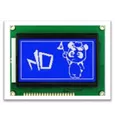
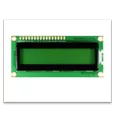
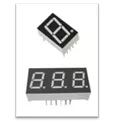
In today’s world, where technology has reached its current level, light-powered systems are increasingly becoming a part of our daily lives. One of the terms we encounter at this point is optoelectronic components. So, what exactly are these components?
Briefly put, optoelectronic components are semiconductor circuit elements that convert electrical energy into light or light into electrical energy. These components can both detect and generate light. At the core of many technologies we use in daily life—often without even noticing—are these tiny yet highly functional parts.
As Sarnikon, we are aware of how vital a role optoelectronic components play, and we develop our solutions in this field specifically tailored to sectoral needs.
Although they may seem complex at first glance, understanding what optoelectronic components do is actually quite simple. These components enable electronic systems to communicate with or respond to light. For example, an automatic door detecting you when you come in front of it and opening, or a TV remote control working, are all based on this technology.
Besides this, they have a very wide range of applications, from industrial automation systems to medical devices, from fiber optic communication to security sensors. Lights that switch on automatically in the dark, touch screens, laser measurement systems, and even a simple LED indicator all operate thanks to the contribution of these components.
As Sarnikon, we offer high-quality and tested optoelectronic components to ensure these technologies operate more efficiently and reliably.
Optoelectronic components are used in many digital and analog circuits. They are one of the first choices of circuit designers, especially in applications requiring signal transmission, optical isolation, and light detection.
We can list their areas of use as follows:
- Automation systems: In scenarios where industrial machines need to operate sensitively to light or motion,
- Security systems: Motion detectors, infrared detectors, optical sensors,
- Medical devices: Heart rate monitors, blood pressure meters, laboratory analysis devices,
- Consumer electronics: In devices such as TVs, phones, and remote controls,
- Lighting systems: In automatic light control circuits,
- Telecommunications: In data transmission via fiber optic cables.
In short, optoelectronic components are used in every circuit where an interaction with light is required. In this way, systems consume less energy, perform more accurate measurements, and become safer.
The basic operating principle of these components is quite clear: the conversion between light and electricity. For example, when a LED is powered electrically, it produces light. Conversely, a photodiode or phototransistor detects light and converts it into an electrical signal.
Optoelectronic components that detect light generally produce a change in resistance or voltage depending on light intensity. This signal is used in the circuit as a command or feedback. For instance, when a security camera system detects movement in the environment (a change in light), it can trigger the alarm system.
Some components have the ability to both emit and detect light. In particular, components called optocouplers (or optoisolators) are widely used to provide electrical isolation between two circuits. In this way, even if one circuit fails, the other is not damaged. This offers a major advantage in circuits that require high safety.
Sarnikon, with its high-quality production of optocouplers and photodetectors, provides effective solutions to these safety and performance requirements.
There are many different types of optoelectronic components. Each one has been developed for different functions and circuit requirements. Among the most common types, we can list the following:
- LED (Light Emitting Diode): The most basic component that converts electricity into light.
- Photodiode: Converts light into electric current.
- Phototransistor: A more sensitive and powerful version of the photodiode.
- Optocoupler (Optoisolator): A component that provides electrical isolation and transmits signals via light.
- Laser Diodes: Used especially in communication systems.
- Light Sensors (LDR): Changes its resistance according to ambient light.
Each has different areas of use and technical specifications. Therefore, when designing a system, which optoelectronic component will be used must be chosen carefully. Sarnikon is pleased to provide technical support to its customers during this selection process.
Light has a much wider spectrum than what is visible to the human eye. Optoelectronic components are designed to operate within a specific portion of this spectrum.
- Visible light: Most LEDs operate in this range. Colored LEDs are included here.
- Infrared (IR): Systems such as remote controls and security sensors use this range.
- Ultraviolet (UV): Preferred in certain special detection and sterilization systems.
Selecting the correct wavelength is critically important for the success of the system. A component operating at the wrong wavelength will not work efficiently or may not work at all. Within Sarnikon, there are component alternatives that operate at different light wavelengths.
Today, with the rapid development of electronic systems, secure and stable communication has gained great importance. This is exactly where optocouplers come into play. An optocoupler, also known as an optical isolator, is a special component used to provide electrical isolation between two circuits. Inside, there is an LED and a phototransistor. When the LED receives a signal, it emits light, and this light is detected by the phototransistor and transmitted to the other side. In this way, signal transfer occurs without physical contact.
Optocouplers are especially preferred in sensitive electronic systems, power electronics, microcontroller applications, and communication systems. Why? Because they protect the circuit from external influences, block interference, and help the system operate stably. For example, in an industrial machine, they provide an ideal solution for ensuring isolation between the control circuit and a high-power motor.
Optoelectronic components are circuit elements that act as a bridge between light and electricity. They include many different types such as LEDs, photodiodes, laser diodes, optocouplers, and light sensors. These components appear in various forms in almost every area of industry.
Automation systems are one of the most important fields of application. These components are frequently used in sensor systems that detect the position of a product on a production line, or in machines that perform object detection. They are also used in areas where precision is crucial, such as power electronics, medical devices, communication systems, automotive electronics, energy generation, and military technologies.
Sarnikon’s expertise in optoelectronic components provides a major advantage for companies seeking to offer solutions in these sectors. Components manufactured to high quality standards deliver long-lasting and stable performance, thereby preventing potential failures that may occur in the field.
Selecting the optoelectronic component to be used in a system is not as simple as it seems. Especially in industrial applications, an incorrect choice can lead to very serious consequences. For this reason, there are some important points to consider when determining the right component:
- Operating voltage and current: They must be compatible with the circuit; otherwise, performance issues may occur.
- Response time: In high-speed systems, even millisecond-level delays can affect the overall operation of the system.
- Operating temperature: Since high temperatures may be present in industrial environments, the component must be able to withstand these conditions.
- Isolation voltage: In optocouplers used especially in power electronics, high isolation strength is of vital importance.
- Size and mounting type: A suitable structure should be chosen according to the physical conditions of the area where the component will be placed.
Sarnikon not only supplies products to its customers, but also provides tailored technical consulting services. With the right optoelectronic components, it becomes possible to increase system efficiency and reduce failure rates.
With developing technology, sensor systems have become the eyes and ears of machines. At the core of these systems lie optoelectronic components. So, what kinds of sensor systems can be developed with these parts?
- Light sensors: They detect the light intensity in the environment and enable the system to respond accordingly. They are frequently used in automatic lighting systems.
- Distance sensors: They measure the distance of objects and are used in robotic applications.
- Motion sensors: They are especially preferred in security systems.
- IR (Infrared) sensors: By enabling contactless detection, they stand out in the medical and food industries, where hygiene is crucial.
- Optical encoders: They detect the position of rotating parts and provide information to motor control systems.
At the heart of all these systems are precise and reliable optoelectronic components. The product range offered by Sarnikon is designed to include all the basic components required by these systems. Moreover, it offers both high quality and sustainability-focused solutions.
Although they are quite durable, optoelectronic components can also wear out over time or fail due to external factors. Such failures can sometimes affect the operation of the entire system. So how is fault detection performed?
- Testing with a multimeter: The LED and photodetector parts of the component can be tested separately. Current flow and light transmission can be measured.
- Using an oscilloscope: By comparing the input and output signals, it is possible to analyze whether there is any delay or signal loss.
- Comparison with a spare component: Comparing it with a part known to be working is a practical method for fault detection.
- Heat check: Abnormal heating is often a sign of an internal problem.
- Visual inspection: Physical cracks, discoloration, or burn marks can provide important clues.
As Sarnikon, our recommendation is not to neglect periodic maintenance and testing. Accurate diagnostics prevent faults from escalating and ensure continuity of production.